Showing posts with label veterinarian. Show all posts

Thursday, December 31, 2015

New Year's Resolutions for Dog & Cat Owners

Follow my blog with Bloglovin


2015 seems to have gone by in a flash and here we are, welcoming 2016, a brand new year and a brand new start. The slate is clean so let's talk about what we can do for our dogs and cats this year.

Every dog and cat needs an annual veterinary check-up. Most people remember to take their dog in annually but they don't take their cat. Cats need an annual veterinary visit every bit as much as dogs. They are living, breathing sentient beings who need the same amount of attention, love and care.
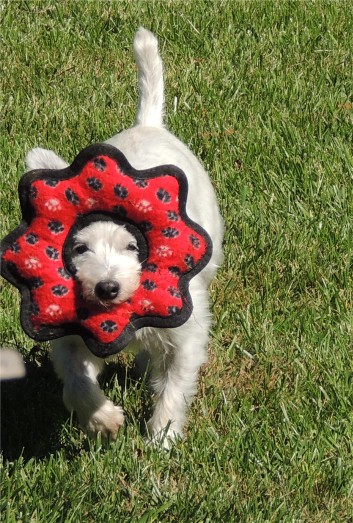
Photo Courtesy of Susan Bulanda

Make this the year you will ask your veterinarian to show you how to brush your pet's teeth. It's easier if you start with a puppy or kitten but you can very slowly acclimate most dogs or cats to having their teeth brushed. They are subject to the same dental problems as we are and germs leaching down from dirty teeth can cause all sort of health problems.

No matter what sort of climate you live in, plan to do more with your pets. Clicker training is great for exercising the mind as well as the body. Don't just turn your dog out in the yard; take him for walks. It's great bonding time. Play games with your cats using interactive toys. You can also clicker train them to do all sorts of tricks. They'll love the time they spend with you and keep sessions to about 5 minutes about 3 times a day. Be sure your pet is dressed appropriately for the weather. In cold weather small dogs and those with little or no haircoat will need a coat or warm sweater. Hairless cats will also appreciate a sweater even though they are indoors. Walking on treated surfaces means you should consider training your dog to wear boots. Otherwise, wash off the pads of his feet so he won't lick them and ingest the ice melt.In warm weather, hairless cats and dogs will need sunscreen otherwise they will sunburn.

Remember that leaving your pet in the car in cold weather is just as dangerous as in hot weather. That  short errand you're going to run might take longer than you think. 

Plan to groom your cat or dog. Preferably daily but you can do it once a week if she has the kind of short coat that won't mat or tangle. 

Be sure they always have fresh water available. Keep nails and claws trimmed and neat.
Photo Courtesy of Lisette Brodey

When your pets are older they will need to see the veterinarian twice a year, starting with a Senior Wellness visit so your veterinarian can get a baseline.  If there is a problem, it can be found sooner and treatment started before it becomes embedded and is harder to treat and takes longer to resolve. That also means it's more expensive. If your older pets stay on their bed or have problems moving, take them to veterinarian. Telling yourself it's just old age is doing your cat or dog an injustice.

If your cat or dog has the right temperament for it and is properly socialized, this may be the year you want to find out about doing therapy work with your pet and sharing the love. You might try a new dog sport, or feline agility. The possibilities are seemingly endless. 


Remember that your pet is not just your best friend but you are your pet's best friend.

Aimee and I wish you and your pets a Happy, Healthy New Year!


Saturday, August 16, 2008

When It's Not Always a Behavior Problem

One of my areas of special interest is animal behavior. So many behavior problems can be fixed with some professional help, either from a Veterinary Behaviorist, an Applied Animal Behaviorist or a Certified Animal Behavior Consultant. Not everything that's assumed to be a behavior problem is one.

The first thing my colleagues and I do, as Certified Animal Behavior Consultants, is send the client to their veterinarian for a complete work-up and, in the case of a dog, a complete Thyroid Panel. It's imperative to know if the problem is organic in nature and the behavior is the result of an underlying physical problem.

Some cases can be more confusing than others, especially for the layperson. Here's a case in point, and a little food for thought. I'm deliberately omitting the names and the place. It could have happened to any rescue person anywhere in the world.

A cat was brought into rescue and placed in a foster home. She was, naturally, a bit frightened at first and supposedly had some problems in her previous foster home. The new foster was prepared to give the cat a fresh start.

The cat was sweet and loving most of the time but for what seemed like no reason at all and from out of nowhere, the cat would growl and bite, going from Angel Kitty to Cujo Cat in mere seconds. After some time with the new foster, the rescue groups board decided that the cat should be put down, that there was a safety issue. That can be a very wise choice in many cases. In this case, the foster refused to do that and would have spent his own money on veterinary care if necessary even though, like so many people, he has precious little to spare these days. The cat was too loving most of the time and he was convinced that this cat was worth saving. He simply didn't have the experience with rescue cats to make a final evaluation.

The cat was subsequently sent to another foster who has a great deal of experience with rescue cats (and dogs). She found the same to be true in her house. The cat was mostly sweet and loving, a purring little angel who appreciated any display of affection and was happy to cuddle, and yet she would suddenly turn. This woman was convinced that there was something more to it and began to observe the cat very carefully.

She finally noticed that the cat's almost reflexive reaction came when anyone petted her back end, especially if they got near her tail. Ah hah! Also, if another cat came up to her and she had to flick her tail it would set her off. The movement seemed to be causing her pain. A broken tail, perhaps?

Off to the veterinarian they went this past week. Upon examination, the veterinarian found the cat to be very sweet, trusting and affectionate. Until he began to examine her hind quarters. Ooops. Out came Cujo Cat. He thought she didn't need an x-ray. If the tail were broken it had happened a long time ago and had healed but she was, he thought, exhibiting signs of inflammation causing excruciating pain. His decision was to give her a steroid injection to reduce the swelling and pain. She may need to be on the injections for the rest of her life if this is what ends the pain for her. Time will tell.

If she is to be rehomed it is with the express understanding that the new owners never touch her hind quarters, certainly never touch her tail. She may very well spend the rest of her life in her current foster home, content, happy and with the understanding that she has a physical problem that may require lifelong treatment.

This was not a behavior problem but a physical problem that manifested itself in what looked like a behavior problem. She will not be put down. She will have another chance and a loving home.

The take-away message here is never assume that you are looking at a behavior problem in a rescue animal or one of your own pets. Go to a veterinarian as soon as possible for a complete work-up and then decide upon the next step when you know if you are dealing with an organic problem or a true behavior problem.